-
Deep, REM, and Light sleep each play an important role in overnight recovery. SleepWatch helps you understand your sleep stages and wake up feeling more refreshed with Smart Alarm, which gently wakes you during lighter sleep.
Understanding Your Sleep Stages with SleepWatch
A good night’s sleep isn’t just about how long you sleep—it’s about how your body moves through different stages of sleep. Each stage plays a unique role in helping you feel restored, recharged, and ready for the day.
SleepWatch breaks this down for you visually and intelligently, giving you a clear picture of how your night unfolds—from light sleep to deep recovery and REM cycles.
Your Night, Visualized
With SleepWatch, you can see your full sleep pattern across the night, including time spent in Deep, REM, and Light sleep. This makes it easier to understand not just how much you slept, but how well your body cycled through essential stages.
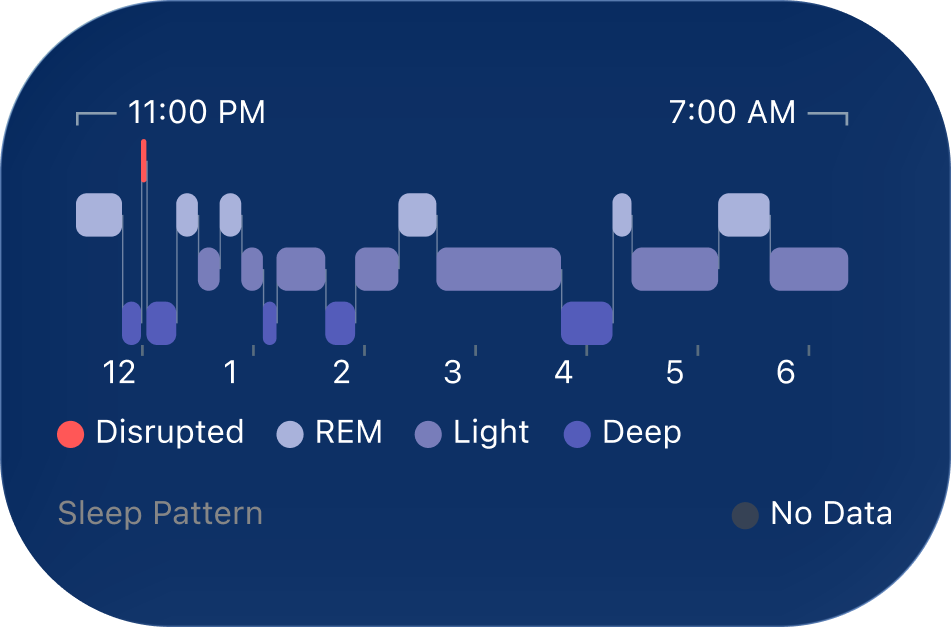
You’ll also see summaries like:
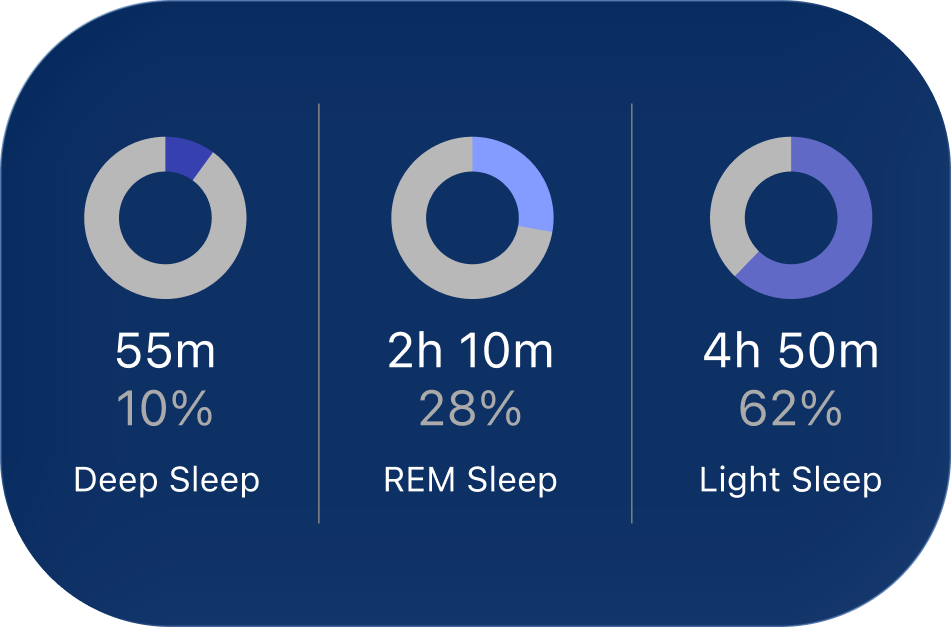
- Deep Sleep: Physical restoration
- REM Sleep: Cognitive and emotional processing
- Light Sleep: Transition and recovery preparation
Together, these stages form the foundation of truly restorative sleep.
What is REM Sleep?
REM (Rapid Eye Movement) Sleep is when your brain is highly active. This is the stage associated with:
- Dreaming
- Memory processing
- Learning and problem solving
- Emotional regulation
REM sleep is essential for mental sharpness and creativity. Without enough of it, you may feel mentally foggy or less focused the next day.
What is Deep Sleep?
Deep Sleep is when your body focuses on physical recovery.
During this stage, your body works on:
- Muscle and tissue repair
- Energy restoration
- Metabolism regulation
- Memory strengthening
Deep sleep is often called “slow wave sleep” and tends to decrease with age. Even small improvements in deep sleep can have a meaningful impact on how refreshed you feel.
What is Light Sleep?
Light Sleep acts as the bridge between wakefulness, deep sleep, and REM
In this stage:
- Your body temperature drops
- Muscle activity slows
- Your body prepares to enter deeper, more restorative stages
Light sleep typically makes up the largest portion of your night—and that’s completely normal. It plays a critical role in helping your body transition smoothly through sleep cycles.
How SleepWatch Uses This Data
SleepWatch doesn’t just show you your sleep stages—it helps you use them.
By analyzing your patterns over time, SleepWatch can highlight trends and help you understand what supports better recovery. You’ll start to see how your habits influence not just how long you sleep, but how effectively your body moves through each stage.
Wake Up at the Right Time
Your sleep stages don’t just matter during the night—they also matter when you wake up.
SleepWatch’s Smart Alarm analyzes your current sleep state to wake you during a lighter stage of sleep, rather than pulling you out of deep sleep. This can help you feel more refreshed, alert, and ready to start your day.
Better sleep starts with better understanding. With SleepWatch, you can go beyond hours slept—and start optimizing how your body truly rests and recovers each night.